
Why water treatment in Fountains is
mandatory
Fountains have long played an important role in public spaces. They are architectural features, landmarks, and increasingly places where people come into direct or indirect contact with water. Along with this function comes responsibility - especially for the quality of the water circulating within the fountain system.
Contrary to common belief, a fountain is not simply a static water basin. It is a dynamic water system, exposed to the same sanitary and technical risks as swimming pools, cooling systems, or water mist installations.

Fountain Water Quality - Real and Often Overlooked Risks
Water in fountains is constantly exposed to external factors such as:
urban dust and traffic pollution,
leaves, sand, insects, and bird droppings,
high temperatures and intense sunlight,
contact with people and animals.
Without proper treatment, this leads to:
algae growth and biofilm formation,
bacterial contamination (including Legionella),
cloudy water and unpleasant odors,
accelerated wear of pumps, nozzles, and fittings.
These are not only aesthetic issues - they are sanitary and operational risks.

What Water Parameters Must Be Maintained?
Although many countries do not have a single regulation dedicated exclusively to fountains, health authorities across Europe apply standards derived from public swimming pools and technical water installations. This applies in Poland as well as in Germany, France, and Italy.
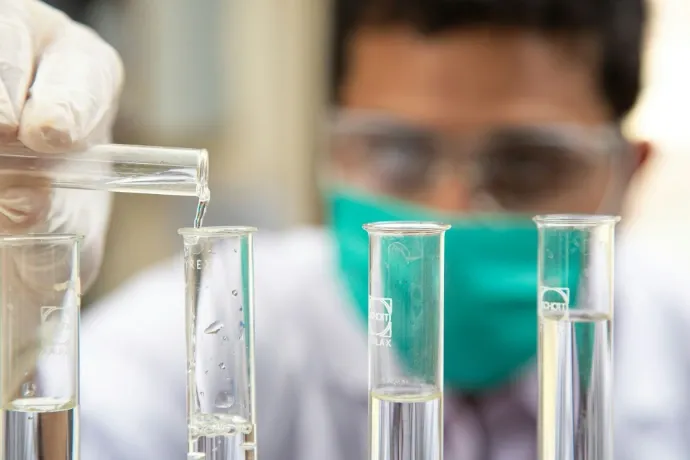
In practice, the following parameters must be continuously maintained:
pH value: 6.5-7.6 (optimal range 7.0–7.4),
free chlorine: 0.3-0.6 mg/l,
combined chlorine: ≤ 0.3 mg/l,
turbidity: ≤ 5 NTU (operationally < 1 NTU),
Escherichia coli, enterococci, Pseudomonas aeruginosa: 0 CFU / 100 ml,
Legionella spp.: < 100 CFU / 100 ml (often required to be non-detectable),
water temperature: preferably ≤ 25°C.
Maintaining these values manually, especially under changing weather conditions, is extremely difficult in daily operation.

Western Europe: Control and Responsibility
In Germany, France, and Italy, public fountains are treated as potential sanitary risk installations. Water quality control is supervised by local or regional health authorities, and responsibility always lies with the owner or operator.
If parameters exceed permitted limits, authorities may impose:
immediate shutdown of the fountain,
mandatory corrective actions and retesting,
administrative fines,
civil - and in extreme cases criminal - liability.
This clearly shows that water quality control is not a formality, but a real operational obligation.
Technology as a Practical Answer
This is where a systematic approach to fountain water treatment becomes essential. An effective system must combine:
forced water circulation,
mechanical filtration,
pH stabilization,
continuous disinfection,
regular filter cleaning.
For this reason, more and more investors and designers are choosing prefabricated water treatment stations, delivered as complete, ready-to-install technological units.
Such an approach:
shortens installation time,
minimizes construction errors,
ensures consistent quality,
simplifies long-term operation and maintenance.
Delivering the system as a plug & play setup, with factory-assembled piping and optional automatic filter backwashing, allows operators to focus on the fountain’s function — not on constant water quality troubleshooting.
Proper water treatment does not increase operating costs - it reduces them.
Stable water parameters mean:
lower water consumption,
fewer water replacements,
fewer failures and shutdowns,
longer service life of equipment,
reduced chemical usage through precise dosing.
At the same time, it is a more environmentally responsible solution, especially for fountains operating for many months each year.
Today, a fountain is no longer just a decorative element. It is a technical installation subject to sanitary, operational, and legal requirements. Maintaining proper water quality is not a matter of aesthetics alone, but of safety, responsibility, and cost control.
That is why complete, ready-made water treatment stations are increasingly becoming the standard approach - not an optional upgrade.
It is no longer a question of if water treatment is needed, but how to do it once - and do it right.


Responding to These Challenges with a Ready Solution
All the challenges described above — sanitary requirements, microbiological risks, operational costs, and operator responsibility - make it clear that fountain maintenance cannot rely on improvised or temporary solutions.
The market increasingly demands systems that:
maintain stable water parameters continuously,
are predictable and reliable in operation,
minimize installation and operational errors,
can be commissioned quickly during project execution.
This approach is exactly what led to the development of fountain water treatment station.

A Complete System Instead of On-Site Assembly
Rather than designing and assembling individual components on-site, we offer a fully prefabricated fountain water treatment station, delivered as a complete setup mounted on a transport pallet.
All key components:
circulation pump,
sand filter,
pH dosing system,
disinfectant (chlorine) dosing system,
technological piping and valves,
All components are factory-assembled, glued, and tested before delivery.
On site, the station only requires:
electrical power connection,
connection to the fountain piping.
This plug & play concept significantly reduces installation time and eliminates many common commissioning problems.
Automation Where It Truly Matters
For projects requiring higher reliability, the station can be equipped with an optional controller for automatic sand filter backwashing. This solution:
ensures consistent filtration efficiency
reduces manual intervention
extends filter media lifespan
stabilizes long-term system performance

One System - Fewer Problems
From an operator’s perspective, this approach:
supports compliance with sanitary requirements,
reduces downtime and failures,
simplifies maintenance,
improves cost control over the system’s lifecycle.
Instead of reacting to water quality issues, the system prevents them by design.


A Natural Closing Thought
Fountains will remain part of public spaces - but the way they are operated is changing. Sanitary regulations, public expectations, and operational realities increasingly favor well-engineered, prefabricated technological solutions.
At that point, a complete water treatment station stops being “just a product” and becomes a practical tool for predictable, stress-free fountain operation.